- Details
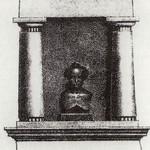
Franz Schubert died on 19 November 1883 and this week we're commemorating on Liederabend the 134th anniversary of his death. He was 86 years old, and he passed away quietly, as he had always sung in his Lieder: he took a nap after having lunch and death took him in his arms to rest after a long and worthwhile life. From that inner circle of friends, he used to gather with during his youth, only two of them were still with him: Anton Stadler, his friend since his boarding school times, who died five years later, and Eduard Bauernfeld, who died in 1890. The rest had already died; the dearest Franz Schober, just one year earlier. Grillparzer, too; someone else should write his epitaph.
- Details
 If I ask you the names of Italian composers, it's easy, isn't it? If I ask you Italian composers not known because of their operas... not that easy. And what about Italian song composers? Well, it's becoming increasingly difficult... But we all know Italian song composers! The 19th-century Italian salons weren't unaware of that fashionable entertainment and the most important opera composers (Rossini, Donizetti, Bellini or Verdi) wrote some romanze di salotto, clearly of operatic inspiration, to be performed by amateur singers and pianists with some technical background; Towards the end of the century, the canzone napoletane, originally traditional song, also became parlour songs.
- Details
Schubert steadily appeared on Liederabend during the last few weeks, and more he will do so! Whatever the reason is, we often need him. I've been keeping the song we're listening today for months, Litanei auf das Fest Aller Seelen (Litany for the Fest of All Souls); in fact, it is on the Neue Schubert-Ausgabe with a slightly different name, Am Tage Aller Seelen and it's also called just Litanei. Robert Capell, the author of the book “Schubert's Songs”, published in 1929, says about this lied: "there was never a truer or more touching expression of simple devotion and consoled grief". And also: "the music rises from a pure well of affection and humility." After such words, I could just invite you to listen to the song, but first, let me tell you some more things about it.
- Details
 Jean Paul used for the very first time the word doppelgänger; it was in his novel Siebenkäs, in 1796. The concept was known in many cultures and ages, but it was a particularly notable motif in Romanticism literature. Sometimes, the doppelgänger is an alter ego, a double that represents the worst part of the person. Robert Louis Stevenson, our poet last week, wrote about a doppelgänger in one of his best-known novels, Strange Case of Dr Jekyll and Mr Hyde; Oscar Wilde (yes, he's also among our poets) wrote another novel that deals with that subject, The Portrait of Dorian Gray. Both works, sinister and terrifying, talk about the duality of human nature.
Series