

Last week I referred to Tragödie as a triptych, for lack of a better definition. Because it has three parts, and because it is best appreciated if we consider it as a whole. But also—and this is a reason I had not yet mentioned—because the second part, the one we will hear today, is the one that gives meaning to everything. In other words, it is the central part of the triptych, the main one.
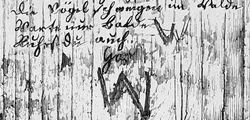
The poem, which begins with the line “Es fiel ein Reif in der Frühlingsnacht” [There fell a frost one night in spring], is not original by Heinrich Heine; he himself says so in the heading: “This is an authentic folk song, which I heard on the Rhine.” There are doubts as to whether he really knew it—which would not be surprising, since he was born and raised in Düsseldorf— or whether he had read it in the collection Rheinische Flora by Anton von Zuccalmaglio, published in 1825. Or perhaps both things.
In any case, it seems that this folk song is the origin of Heine’s poem, because it tells, in just a few words, of a couple who ran away from home, who were unlucky, and who died (we saw it coming, given the title). Thus, the first part of Tragödie seems to be the prologue of the story: the moment when he proposes that she elope with him, and she, as we now know, accepts.
The second poem, as presented by the poet, has three stanzas. The second and third tell us the sad story, while the first speaks of a frost on a spring night that withers the flowers. It seems like a poetic image foreshadowing what will happen, but if we read the poem published by Zuccalmaglio, we find a fourth stanza that Heine did not include, in which the flowers from the beginning are mentioned again, this time covering the lovers’ grave. This stanza begins with the words “Auf ihrem Grab” [On their grave], and this is also how the third part of Heine’s poem begins. Therefore, next week we will continue from there.
Schumann’s song captures the traditional spirit of the verses. It is strophic, with a simple vocal line, while the accompaniment—unmistakably Schumannesque—is very succinct, consisting only of chords that highlight certain words here and there. Es fiel ein Reif in der Frühlingsnacht is a simple and beautiful song, which we will hear performed by Bryn Terfel and Malcolm Martineau.
Es fiel ein Reif in der Frühlingsnacht,
Er fiel auf die zarten Blaublümelein;
Sie sind verwelket, verdorret.
Ein Jüngling hatte ein Mädchen lieb,
Sie flohen heimlich vom Hause fort:
Es wusst weder Vater, noch Mutter.
Sie sind gewandert hin und her,
Sie haben gehabt weder Glück noch Stern;
Sie sind gestorben, verdorben.
Please follow this link if you need an English translation
Related articles
Why?
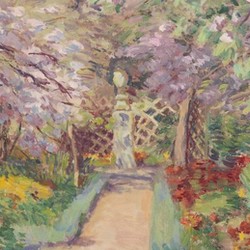
Imagine being in a garden in the spring and realizing that the flowers have lost their colour and scent, the sun isn't as warm as expected, and the ground is dry. Imagine that you realize that there's nothing wrong with the spring, it's beautiful, as always. It's your gaze that has changed, it's your sadness that keeps you from seeing beauty.
Born from the foam of the sea

Wilhelm Killmayer was born in 1927 in Munich, and died in a nearby village, Stanberg, the day before his 90th birthday. He was born late enough to not have to fight in the war (Dietrich Fischer-Dieskau, for example, born just two years earlier, was not so lucky), but, of course, that disaster affected his life (he was the only one among his classmates who did not join any youth organization [...]
An old, lonely tear
Nadia Boulanger gave her first music lessons at her sixteen, when she was still a student. This pedagogical side was the most significant of his career, which lasted more than 70 years. However, Boulanger was also an organist, pianist, conductor, and composer, although her compositions are from a brief period in her life.