- Details
A Sonnet is a moment's monument,
Memorial from the Soul's eternity
To one dead deathless hour.
One of my ten happiest songs is Silent noon, by Ralph Vaughan Williams. Absolute, fleeting happyness, with Ian Bostridge and Julius Drake.
- Details

Més d'un haurà alçat una cella interrogativa davant això de la "rellevància escassa ", deixeu que m'expliqui i després discutim el que calgui. Els únics lieder de Wagner que es canten i enregistren regularment són els Wesendonck Lieder; fa unes setmanes en vam escoltar un d'ells, Im Treibhaus, una preciositat; tot el cicle ho és. A banda d'aquestes cinc cançons Wagner només va escriure, uns vint anys abans, mitja dotzena de cançons en francès i, encara uns deu anys enrera, les que comentarem avui. És a dir, Wagner va ser un gran compositor d'òperes que de tant en tant va escriure algunes cançons d'interès irregular.
El senyor de posat seriós dels retrats també va ser nen; segons els seus biògrafs un nen i més tard un adolescent entremaliat, malaltís, fàcilment excitable i que només estudiava el que li venia de gust quan li venia de gust. Era el novè fill de la família i el seu pare va morir sis mesos després que nasqués; la seva mare es va tornar a casar de seguida amb un vell amic, Ludwig Geyer, que va estimar i va fer de pare a tota aquella canalla fins que va morir el 1821. Llavors l'extensa família va anar separant-se i retrobant-se durant uns anys en funció de les oportunitats que els sorgien a uns o altres.
Ja des de ben petit Richard es va aficionar al teatre, primer pel seu padrastre, que era actor, i més tard per la seva germana Rosalie, també actriu. A més l'oncle patern, Adolf, era un apassionat de Shakespeare, passió que li va encomanar a Richard (sembla ser que també li va encomanar la prolixitat escrivint). Pel que fa a la música, el seu primer ídol va ser Carl Maria von Weber, que era amic de la família i tenia el nen fascinat amb la seva òpera Der Freischütz (El caçador furtiu), com el tindrien fascinat no gaire més tard algunes obres de Beethoven que va estudiar de manera gairebé obsessiva. En l'entorn estrictament familiar, dues germanes seves, Louise i Klara, van ser cantants d'òpera.
Entre els personatges peculiars que va conéixer Richard en aquells primers anys, concretament el 1829, hi ha un altre músic, Johann Christoph Kienlen, que només llegia un llibre: Faust, de Goethe. Aquell mateix any, el 28 d'agost, Goethe feia 80 anys i l'aniversari es va celebrar al Teatre de la Cort de Leipzig amb una representació completa (de durada parsifaliana) de Faust, a on Rosalie feia de Gretchen. Entre una cosa i l'altra, aquell adolescent va llegir i rellegir l'obra i va acabar component el 1830 una de les seves primeres obres musicals, Sieben Kompositionen zu Goethes Faust, WWV5 (Set composicions sobre Faust de Goethe). Tenia només 17 anys però ja prometia, mireu els requeriments de les set cançons:
No. 2 Bauer unter der Linde. Per a soprano, tenor, cor i piano
No. 3 Branders Lied. Per a baix, cor masculí i piano
No. 4 Lied des Mephistopheles I. Per a baix, cor masculí i piano
No. 5 Lied des Mephistopheles II. Per a baix i piano
No. 6 Gretchen am Spinnrade. Per a soprano i piano
No. 7 Melodram Gretchens. Per a veu parlada i piano.
Escoltarem la primera cançó de Mefistòfil en la versió de Thomas Hampson i Geoffrey Parsons (sense el cor, que només repeteix els dos versos finals). Se l'anomena també pel seu primer vers, Es war einmal ein König (Una vegada hi havia un rei), o com a Cançó de la puça. És una cançó de taverna; Mefistòfil porta a Faust a divertir-se i arriben a una taverna a on hi ha un grup de joves cantant i bevent, i allà els canta aquestes coples abans d'embruixar-los només per enriure-se'n.
Es war einmal ein König,
Der hatt' einen großen Floh,
Den liebt' er gar nicht wenig,
Als wie seinen eig'nen Sohn.
Da rief er seinen Schneider,
Der Schneider kam heran;
"Da, miß dem Junker Kleider
Und miß ihm Hosen an!"
In Sammet und in Seide
War er nun angetan,
Hatte Bänder auf dem Kleide,
Hatt' auch ein Kreuz daran,
Und war sogleich Minister,
Und hatt einen großen Stern.
Da wurden seine Geschwister
Bei Hof auch große Herrn.
Und Herrn und Frau'n am Hofe,
Die waren sehr geplagt,
Die Königin und die Zofe
Gestochen und genagt,
Und durften sie nicht knicken,
Und weg sie jucken nicht.
Wir knicken und ersticken
Doch gleich, wenn einer sticht.
Una vegada hi havia un rei
que tenia una gran puça,
a la qual no estimava menys
que al seu propi fill.
Va cridar el seu sastre,
i el sastre hi va anar.
"Pren-li mides al cavaller per a un vestit
i per a uns pantalons"
Amb vellut i seda
anava ara vestida,
duia cintes a la roba,
hi duia també una creu.
I aviat va esdevenir ministre,
i tenia una gran estrella.
I els seus germans es van convertir
també en grans senyors a la Cort.
I les dames i els cavallers de la cort,
estaven ben fastiguejats,
la reina i les seves donzelles,
cosides a picades,
i no tenien permès remoure's,
ni fer-les fora gratant-se.
Però nosaltres ens removem i les fem fora
quan ens piquen.
- Details
 Is Cäcilie a happy or a desperate song? Do you think that the poet will convince his beloved? Two different approaches: Jonas Kaufmann and Helmut Deutsch, and Simon Keenlyside and Malcolm Martineau.
- Details
 This week we listen to a Basque folk song, Mundian den ederrena, beautifully harmonized by Father Donostia and performed by Almudena Ortega i Josu Okiñena.
- Details
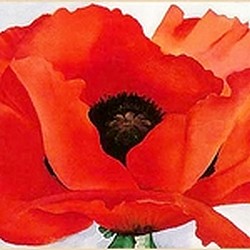 What is happiness? Are the ten Art Songs on the list happy ? Which one would you add or remove? Please listen to Dietrich Fischer-Dieskau and Gerald Moore performing Schumann Frühlingsnacht. A couple minutes of happiness.
Series