- Details

The first Christmas song of this year was one only in its title; in reality, it was a cry full of anger in the midst of war. The second came closer, but still wasn’t quite one. That is why, to await the turn of the year and the arrival of the Three Wise Men, I have chosen a genuine carol, with the Baby Jesus, the shepherds, the offerings, and the joy for the hope that has just been born.
- Details

In 1823, Fanny Mendelssohn (she would not become Fanny Hensel until several years later) composed eight Lieder inspired by poems by Wilhelm Müller, all of them taken from the first part of his collection Sieben und siebzig Gedichte aus den hinterlassenen Papieren eines reisenden Waldhornisten [Seventy-seven poems from the posthumous papers of a travelling horn-player] [...]
- Details
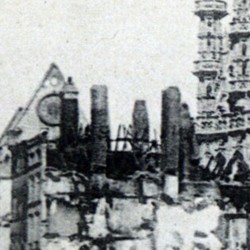
The first Christmas song of this year is an unusual one. It does not speak of peace, love, light or hope. It is a song filled with anger an0d despair, calling for vengeance, agitated, and understandable only within the wartime context in which it was conceived.
- Details

Do you remember that some time ago I told you about the Chansons de Bilitis, a selection of poems found in the tomb of a Greek poetess from the 6th century BC, translated into French by Pierre Louÿs? And that I also explained how, a few years later, Louÿs revealed that it had all been his invention? There never was a Bilitis, and even less her tomb.
- Details

Roger Quilter was born in 1877, the third son of Lord and Lady Quilter. His father was not only the holder of a considerable estate, but also possessed a personal fortune of equal size, so young Roger grew up in a privileged environment. He studied at Eton, where he must have been something of a rara avis: unfortunately, his health never accompanied him, even as a child [..]

Series