- Details
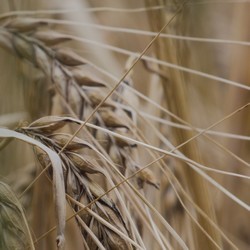
Do you remember the scene in North by Northwest with Roger Thornhill running through a cornfield, chased by a crop duster trying to kill him? Or the baseball players in another cornfield in Field of Dreams? Or Maximus’s hand brushing the wheat as he walks through a field in Gladiator? The beauty and vastness of cereal fields are very cinematic.
- Details

In early 1879 Karl Hahn –a German businessman who had made his fortune in Venezuela–, his wife Elena María Echenagucia and their children left the country to settle in Paris. For the Hahn family, music and, more broadly, the arts were essential, and this was reflected in the careful education of the children. It soon became clear, however, that the youngest, Reynaldo [...]
- Details

I'm not much of a cake or sweets person. When I was a child, I asked my family not to make me a birthday cake because I didn’t like it. And that hasn’t changed to this day. But this week I’d like to invite you all to a birthday cake with fourteen candles, for Liederabend’s fourteen years. Since it’s a virtual cake, everyone can choose the one they like best. Mine will be cheesecake, please.
- Details

Every time I listen to Mignon (aka Kennst du das Land) by Hugo Wolf, I ask myself how it is possible that the composer doesn’t have a statue in the main square of every town. And then I think that not even Franz Schubert has a statue in the main square of every town. In fact, neither of them even has a street in Barcelona (unlike Verdi, Mozart, Beethoven or Sibelius, who[...]
- Details

If you are regular readers of Liederabend, you’ll know that whenever I recommend a song from a cycle, I always suggest listening to the whole thing, because when I present the songs one by one, I inevitably take them out of context. And, in general, if they form part of a cycle, there is a reason for it.

Series