- Details

After our summer break, this is the post nº 9 of the Wilhelm Meister's songs series. In July, we left Wilhelm saying goodbye to the countess, once the celebrations in honor of the Prince (the one who took Wilhelm and the theater company to the castle) finished. That was the end of the 3rd book; now we are in the first chapter of the 4th book, where we’ll find the sixth song of the series.
In these few pages the plot hasn't developed that much. The baron goes to see the troupe off and gives them some gifts on behalf of the Count and Countess, including a bag of gold coins for Wilhelm. Everyone is packing and the harpist tells Wilhelm that he's not going with him because misfortune haunts him and people around are in danger.
- Details

Today is September 17th; Fritz Wunderlich died this day in 1966, just before turning 36. As every year, we’ll remember him dedicating to him this weekly post. In our first year, we listened to him singing Beethoven, in the second one was Schubert and this year is going to be Strauss. We also heard him singing Haydn and Schumann, and we are going to be able to listen to him singing few more new composers because, as we said last year, Wunderlich's Lieder reperoire wasn't too extensive. If you haven't listened to him yet, you might wonder why he's such a special singer considering the few Lied he sang. If that's the case, I wish you get to know him today and share our deep admiration.
- Details

Last year, even before the Oxford Lieder Festival 2013 began, its webpage already announced the Festival 2014, “The Schubert Project”: they intended to offer a complete performance of Schubert’s Lieder. Yes. The whole lot. Every single Lied.
That means about six hundred fifty songs, which is easier said than done. Such an initiative has my full admiration, regardless who the honoured composer is. Although, in fact, we are talking about Schubert, the apple of my eye! If we were on Twitter, I would add here two or three < 3 which, after pressing the Return key, would become two or three hearts, but we are on a blog (a very serious one indeed) so you will have to [...]
- Details

It doesn't matter if today is already September 3rd (Wednesday, remember I changed the posting day) and we're opening a new season; I just refuse to believe that summer comes to an end. So I suggest a journey to some point between New Zealand and South America, to an island called Orplid that holds a nice story:
"Once upon a time two boys, Eduard and Ludwig, studied theology at the seminary in Tübingen. The kids got bored at class and felt smothered by the disciplined life they led. That's why, whenever they could, they lived in an imaginary land called Orplid. Eduard and Ludwig secretly assembled some friends and told them about that island where heroes lived, free of hunger or illness.
- Details
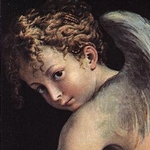
From time to time I especially suggest the song that I share on the post because I like it very much. I've never posted a song I didn't like at all, but there's a first time for everything. To make it even worse, I'm talking about a song that is considered among the best of this composer, Amor, by Strauss. Gosh, I’ve already said it: I can't stand Amor.
Why am I confessing now? You can blame the summer heat as I take it pretty badly and I always end up doing strange things. Anyway, I’ll tell you how it was: I was revising the two scheduled Strauss' Lieder until the end of the year in my blog's notebook and I realized that the two singers were a tenor and a baritone. [...]

Series