- Details

Poems (and, by extension, songs) that invoke the night and ask it for a restorative sleep are relatively common. Darkness unsettles us and, whether we are awake or asleep, our worries and fears grow larger and weigh us down. Even an insignificant detail from the day, something we barely remember, can turn into a distressing nightmare.
- Details

Last week I told you about Korngold’s Nachtwanderer, and I mentioned that I had noted down two other songs composed from the same Eichendorff poem. Since it’s all still fresh in our minds, yours and mine, and I’m short on time this week, I suggest we listen to one of them: the one by Hanns Sommer.
- Details

Erich Wolfgang Korngold published his first collection of lieder in 1916, at the age of nineteen. They were the Sechs einfache Lieder, op. 9, and the title, “Six simple songs”, must have been a small joke or an irony, because simple, strictly speaking, they are not.
- Details

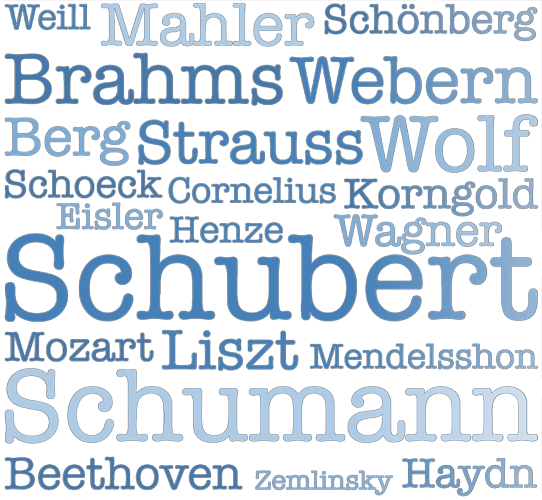
I had never stopped to count how many composers are performed at a Schubertíada. This year I went through the programme, and in the lied recitals there will be twenty eight of them (and if we add the chamber concerts, thirty four). Quite a variety, right? Shall we go through them?
- Details

When we say Italienisches Liederbuch, we think of Hugo Wolf. It makes sense: this collection is probably his best known work —as far as Wolf’s works can be known, you know what I mean. But there is (at least) one other Italienisches Liederbuch in the repertoire: Joseph Marx’s.

Series